 |
|
The Slowest Way to Play Chess Might Be the Best OneSomewhere between a blitz game and a formal tournament match sits a format that most casual players have never tried.Correspondence chess gives each side hours, or days, to make a single move. No clock ticking down. No opponent staring across the board waiting for you to commit. Just a position, as much time as you actually need, and the freedom to walk away and come back to it later. That sounds slow, and it is. But slow turns out to be the entire point. A player who blunders a piece in a five-minute blitz game usually blames the clock. In correspondence chess, there’s no clock to blame. Every mistake is a genuine mistake, made with all the time in the world to avoid it. 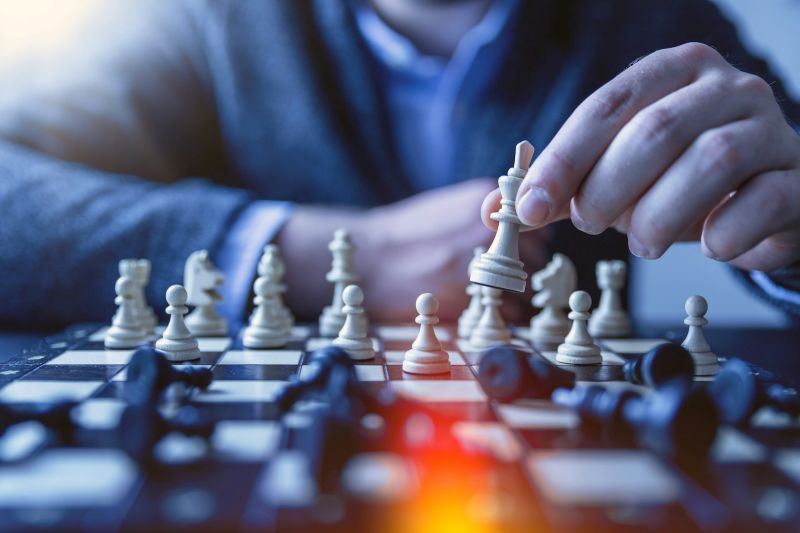 Where This Format Actually Came FromBefore the internet, correspondence chess meant literal letters through the postal system. Players would mail a single move to an opponent, sometimes on the other side of the world, and wait weeks for a reply. A single game could stretch across years. Some historic postal games took longer to finish than entire chess careers do today.Email sped things up considerably, and dedicated servers sped things up further still. What never changed through any of these format shifts is the core idea. Two players, one board, and enough time between moves to actually think rather than react. The medium changed. The patience required stayed exactly the same. Playing a Dozen Games at Once Isn’t Unusual HereOne detail surprises newcomers more than anything else about the format. Correspondence players rarely play one game at a time. Many keep a dozen or more games running simultaneously, checking in once or twice a day to make moves across whichever boards need attention. A serious player might have games against opponents in six different countries, all moving forward at their own pace, all sitting quietly until it’s their turn again.Many of these games now take place on dedicated online chess platforms. If you’re exploring different services, you’ll also come across sites operating under various regulatory frameworks. These include Curacao Online Casinos and platforms holding a Curacao gambling license, although serious correspondence players generally choose sites based on their chess features, community, and fair-play policies rather than licensing alone. This changes how a person actually thinks about a match. There’s no single game consuming an entire afternoon. Instead, there’s a rotation, a set of ongoing conversations happening at a chessboard’s pace rather than a phone call’s pace. Some players compare it to tending a garden. Nothing needs constant attention, but everything needs occasional care, and skipping a check-in for too long lets things get away from you. The Rules Around Computer Help Are Messier Than You’d ThinkAnyone who plays fast online chess knows the rule around engines. Don’t use them. Full stop. Correspondence chess doesn’t agree on this nearly as cleanly, and the disagreement says something interesting about what the format is actually for.Official events run by the International Correspondence Chess Federation permit engine assistance entirely, treating the format as a deliberate blend of human judgment and machine accuracy. Meanwhile, plenty of casual correspondence platforms ban engines outright and expect pure human analysis, the same way a tournament hall would. Neither approach is wrong exactly. They’re just answering a different question about what the games are supposed to prove. One version tests how well a human directs a powerful tool. The other tests how deeply a human can think alone, given enough time to do it properly. Deep Thinking Beats Fast Instinct HereBlitz chess rewards a very particular skill. Pattern recognition under pressure, quick calculation, nerve.Correspondence chess rewards something almost the opposite. A player can set up the position at home, study it for an hour, walk away, come back, and study it again before committing to a single move. There’s no penalty for taking that long. There’s often a real advantage to it. This tends to produce a different kind of game entirely. Openings get followed deeper into established theory, since there’s time to actually check a database rather than rely on memory alone. Endgames get played with unusual precision, since fatigue, the thing that causes so many blunders in over-the-board chess, simply isn’t a factor when a player has three days to find the right rook move. It Fits Into a Life That Blitz Chess Doesn’tA lot of players discover correspondence chess after real life makes fast chess impractical. Work schedules, family obligations, time zones that don’t line up with anyone they’d want to play.Correspondence chess sidesteps all of that by design. There’s no need to clear an hour in the evening. A move can happen on a lunch break, on a train, or in the ten minutes before bed. That flexibility is part of why the format has kept a loyal following even as fast online chess exploded in popularity over the past decade. It’s not competing for the same moment in someone’s day. It’s filling a different one entirely, the small pockets of downtime that would otherwise go to something far less interesting than a chess position waiting to be solved. A Format Built for People Who Like to Sit With a ProblemThere’s a particular kind of satisfaction that comes from correspondence chess that faster formats can’t quite replicate. It’s the feeling of actually solving something, rather than reacting to it. A tricky middlegame position doesn’t have to be resolved in thirty seconds. It can sit there, half-finished, while a player goes about their day turning it over in the back of their mind, until the right idea surfaces on its own.That’s not a format for everyone, and it was never meant to be. Some players want the adrenaline of a ticking clock. Others want the quiet satisfaction of getting a genuinely difficult position exactly right, with no excuse for getting it wrong except not having thought hard enough. For that second group, correspondence chess remains exactly what it’s always been. Not a slower version of the same game, but a different game entirely, built for people who’d rather sit with a hard problem than rush past it. |
Date and time
Friends online
Favourite boards
Fellowships
Tip of the day
|
|


Copyright © 2002 - 2026 Filip Rachunek, all rights reserved. Back to the top |