 |
|
From Backgammon to Baccarat: The Evolution of "Table Games"Not all games exist to fill time or crown a winner. Some are built to test reasoning, apply structure, or show how decisions unfold under pressure. Table games belong in this group. They are systems designed for interaction, not just entertainment.Across centuries, these games have appeared in many forms. From carved wooden boards to shuffled decks and balanced dice, they have always relied on fixed rules and defined roles. Today, digital formats available on online casino sites continue the tradition. Players can access it with just a few clicks, whether they’re playing blackjack, roulette, baccarat. And it’s not just that, players can also try video poker, jackpot games, bingo rooms, live dealer tables, poker lobbies, or game show-style titles. 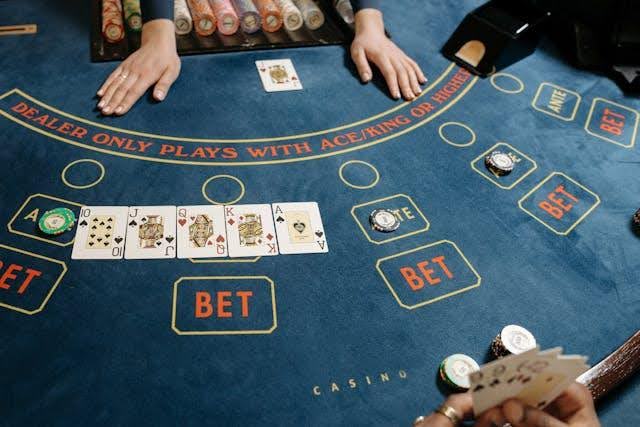 Rolling into Strategy: How Backgammon Balanced Chance and ControlBefore digital timers and notation sheets, early games were tactile and symbolic. Players moved stones, tossed dice-like objects, and tracked progress with simple tools. But even these early formats had clear systems behind them.From Ur to Nard: Where It All StartedThe Royal Game of Ur, dating back to around 2600 BCE, is one of the earliest known board games. Played on a carved grid with pyramidal dice, it involved racing pieces across a set track. Its rules aren’t fully known, but researchers believe it combined movement, luck, and ritual significance.Later, games like Senet from Egypt also used track-based movement and fixed sequences. These games were early examples of how players could engage with a shared rule system while navigating chance. In Persia, Nard emerged as a more strategic variation. It featured 15 checkers per side and dice rolls to determine movement. This game would later evolve into what is now known as backgammon. Backgammon’s Lasting FormulaBackgammon introduced something enduring, a balance between randomness and positional control. Players had to respond to dice rolls, but the path to victory depended on blocking, bearing off, and pacing. It wasn’t just about reacting to luck, but about managing it over time.This blend of strategy and chance gave backgammon a longevity most ancient games didn’t have. It remains one of the clearest examples of how early table games created tension through structured unpredictability. Beyond the Dice: Chess and the Birth of Pure LogicWhile backgammon mixed strategy with dice rolls, chess removed luck entirely. It became a system based on rules, symmetry, and calculated movement. No hidden cards or randomizers were needed.The Rise of Role-Based PlayChess has roots in the Indian game chaturanga, which spread to Persia as shatranj and eventually into Europe by the Middle Ages. Its pieces symbolized military units, each with fixed movement patterns. The battlefield was clear, and the objectives were shared.This new kind of play focused on role-based control. The board was a flat surface, but the decisions were layered. Each piece had value, each square mattered, and each move was part of a larger plan. Chess as a Mental ArchitectureOver centuries, chess became more than a game. It became a way to measure foresight, memory, and spatial awareness. Books were written on openings, famous games were studied, and formal competitions shaped national pride.Unlike earlier games, chess gave players full visibility. Everything was on the table. It was no longer about reacting, but about anticipating. Players were expected to build positions, not just survive. Shuffling Structure: How Playing Cards Changed the TableWhere chess emphasized logic and visibility, card games introduced hidden information and modular systems. This shifted the structure of table games dramatically.The Shift from Grid to DeckPlaying cards appeared in China during the Tang dynasty, then spread through the Islamic world and into Europe by the 14th century. A standard deck of cards created a flexible platform. No board was needed, and games could be played with only cards and a flat surface.Card games replaced position with probability. Players held information others couldn’t see. This created a new kind of decision-making, one based on deduction, reading people, and playing the odds. Deception, Deduction, and New Rules of PlayGames like Piquet in France and Ombre in Spain introduced layered mechanics, including bidding, scoring, and trump selection. Players had to remember past plays, guess opponents’ hands, and time their moves carefully.Poker took this even further, adding betting sequences, bluffing, and hand rankings. Now, players didn’t just rely on what they had, they relied on what they could make others believe. The core structure shifted again, from shared visibility to concealed variables. Card games made table play more dynamic. They introduced new forms of strategy, where information was incomplete and outcomes depended as much on human reading as on numbers. Baccarat and the Rise of Automated OutcomesWhile poker and other card games emphasized choice and psychology, baccarat took the opposite path. It created a table game with minimal player input and maximum structural consistency.Structure Without StrategyBaccarat began in Italy and gained popularity in France during the 19th century. Over time, it split into multiple forms, including Chemin de Fer, Baccarat Banque, and Punto Banco.In most versions, players do not make decisions during the hand. Cards are dealt based on fixed rules, and outcomes are determined by set sequences. The goal is simple, bet on the side closest to nine. A System Designed for ClarityBaccarat reduces complexity. It eliminates in-play decisions and focuses only on betting before the cards are dealt. The game moves quickly, the rules are applied consistently, and the outcomes are resolved automatically.Unlike backgammon, which rewards adaptive play, or chess, which rewards deep planning, baccarat rewards neutrality. Its value lies in its simplicity. The player watches the structure work, rather than shaping it. Culture on the Table: What Games Say About UsThe design of table games often reflects the culture they came from. Their rules encode values, habits, and assumptions about how decisions should be made.Society Embedded in the RulesChess grew in structured societies that valued hierarchy and order. Card games evolved in more fluid social spaces, where uncertainty and adaptation mattered. Baccarat suited environments that valued formality and clarity over contest.Each game’s structure mirrors the cognitive and social climate of its era. Some encouraged aggressive planning, others promoted indirect thinking, and some removed thinking altogether in favor of pre-set fairness. Regional Versions, Local MeaningsAs games moved from one region to another, they changed. The suits on European cards differed from those in Asia. The rules of poker evolved dramatically in North America. Baccarat in Cuba turned into Punto Banco, focused on speed and efficiency.These changes weren’t just cosmetic. They reflected how different groups engaged with structure. What one culture saw as essential, another made optional. Open vs Closed Play: Two Paths for Table GamesAs the genre matured, table games began to follow two major paths. Some emphasized open, player-driven interaction. Others limited choices and let the system run itself.Games That Reward AgencyBackgammon, chess, and poker all reward decision-making. Each round gives players control over what happens next. Their outcomes depend on how players interpret the system and apply it under changing conditions.These games require memory, calculation, and timing. Players can recover from mistakes or capitalize on small advantages. The game is shaped by their choices from start to finish. Games That Enforce FlowBaccarat, War, and some other fixed-deal games remove most of the player’s control. These games are procedural, not tactical. Players engage at the beginning, then observe.In these formats, fairness and repetition are valued more than creativity. They offer reliability over variety, and consistency over tension. Visibility and Hidden Knowledge in Game DesignAnother key factor in how table games evolve is how much information players are allowed to see. This design choice shifts how people engage with the system.Perfect Information vs Incomplete ViewsChess provides full visibility. Every move, threat, and response can be seen and calculated. Poker and other card games obscure part of the game. Players must guess, deduce, and estimate based on patterns.The more hidden the information, the more the game leans on psychology and memory. The more visible the structure, the more it rewards analysis and control. This choice defines the mood and method of a game. It also defines how players experience skill. Table Games Go Digital, But Stay The SameToday, table games are played across screens, but their core designs haven’t changed. Digital platforms have removed friction, not structure.Online tools enforce rules, handle turns, and maintain fairness. Illegal moves aren’t possible, time is tracked automatically, and disputes are rare. The game itself remains untouched. A knight still moves in an L-shape, a poker flush still beats a straight, and backgammon still relies on checker movement and doubling cubes. Digital play adds new layers, including stat tracking, move history, and global opponents. Players can analyze mistakes, track progress, and improve without changing the core mechanics. Online formats extend access, but the thinking behind the games stays rooted in the same traditions. |
Date and time
Friends online
Favourite boards
Fellowships
Tip of the day
|
|


Copyright © 2002 - 2026 Filip Rachunek, all rights reserved. Back to the top |