 |
|
Bobby Fischer’s Plan to Beat Chess MemorizationPicture two grandmasters sitting down to a game. For the first fifteen or twenty moves, neither one thinks very hard. Both are repeating lines they memorized at home, often with an engine’s help. The real game starts only when the memory runs out.Bobby Fischer hated that. He wanted chess to reward talent and creativity, not hours of homework. His fix was simple. Shuffle the back row. Thirty years later, his idea has its own world championship, and Magnus Carlsen is its newest champion. 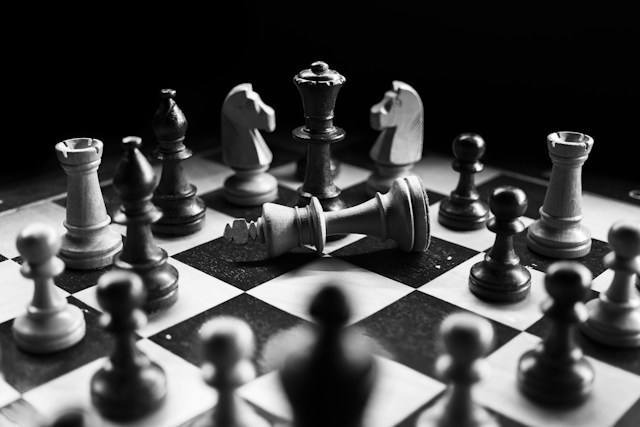 The Problem Fischer Wanted to SolveFischer started developing the idea after his 1992 rematch with Boris Spassky. He had the rules finalized by September 1993 and introduced the game publicly in June 1996 in Buenos Aires, Argentina. He called it Fischerandom chess.His complaint was clear. Opening theory had grown so deep that preparation started mattering more than skill. A player who memorized more lines could win before the middlegame even started. Computers have only made that worse, since engines let players prepare deeper lines than ever. Fischer also said he built the game to keep chess going, not to destroy it. That detail matters. He was not trying to replace chess. He was trying to rescue what he loved about it. How 960 Starting Positions WorkThe pawns stay exactly where they always start. Only the pieces on the back row get shuffled. A few rules keep the shuffle fair. The two bishops must start on squares of opposite colors. The king must start somewhere between the two rooks. And both sides get the same mirrored setup, so neither player gets a head start.Those rules leave exactly 960 legal starting positions. That’s where the name Chess960 comes from. The regular chess setup is one of them, number 518. In one setup, the queen might start in a corner. In another, the knights might sit right beside the king. Randomness plays a different role here than it does in a game of chance. In Anjouan online casinos, luck decides the result of every spin or hand. In Chess960, luck only sets the table. Once the pieces are placed, every move comes down to skill. That difference is the whole point. The shuffle takes away memorized openings. It does not take away the fight. An Old Idea With a New NameShuffled chess did not start with Fischer. Players had toyed with random setups for generations, usually as a curiosity for casual games. Fischer’s contribution was the rulebook.He worked out the final rules with Susan Polgar. He also consulted mathematicians in Budapest to count how many starting arrangements the rules allowed. The answer gave the game its name. The name came later, though. Fischer himself used Fischerandom. When others began calling it Chess960, he joked that his reputation was so bad that people had renamed the game. Over time, he came around to the new name. From Niche Curiosity to Carlsen’s StageFor most of its life, Chess960 stayed on the sidelines. That changed when FIDE added it to the Laws of Chess. The first official world championship was in 2019, and a second came in 2022. The format finally had a home at the top of the sport.Then Magnus Carlsen took on a bigger role in promoting the format. He helped launch the Freestyle Chess Grand Slam Tour in 2025, which featured five Grand Slam events and one open tournament. Carlsen went on to win the tour. Carlsen finished the job in February 2026. Over three days in Weissenhaus, Germany, he played his way through the FIDE Freestyle Chess World Championship and beat Fabiano Caruana in the final. It gave him his first Chess960 world title, and the 21st world title of his career. These days you’ll hear the format called Freestyle Chess about as often as Chess960. How the Game Feels at the BoardThe first few moves look different. There’s no book to lean on, so players fall back on basic ideas. Develop the pieces. Fight for the center. Keep the king safe. Even grandmasters have to think from move one.For viewers, that makes the opening much more interesting. In classical chess, fans sometimes skip the first 15 moves because they have seen them before. In Chess960, the very first move is already a big decision. Castling still works. The king and rook land on the same squares as in regular chess, keeping a familiar part of the game intact. The rules just adjust for where those pieces start. Computers can study any single starting position. No human can memorize all 960. That’s what protects the format. As FIDE’s history of Chess960 describes it, Fischer wanted creativity and talent to replace opening preparation as the deciding factor. Some positions feel awkward at first. A rook stuck in a corner. A bishop with no room to move. A queen crammed beside the king. Part of the skill is sorting those problems out fast. A common first step is to free the trapped piece with a pawn move, then bring it into play. The question changes from “what’s the book move?” to “what does this position need?” Where to Try It YourselfYou do not need a tournament seat to try it. You can test this format at online chess sites. BrainKing, for example, lists Fischer Random Chess next to Capablanca Random Chess and dozens of other chess variants, and a free account is enough to start playing.Here’s a simple way to begin. Before your first move, look at the setup for ten seconds. Ask three questions. Where are the bishops pointing? Is the king safe where it stands? Which pawn move frees the most pieces? Those answers will carry you through the opening. Start with unrated games so a strange setup doesn’t cost you points. Play a handful before judging it. The first few feel strange. After that, most players notice something. They are thinking about the board in front of them, not the notes in their head. That is exactly what Fischer wanted. |
Date and time
Friends online
Favourite boards
Fellowships
Tip of the day
|
|


Copyright © 2002 - 2026 Filip Rachunek, all rights reserved. Back to the top |